Il velluto blu del Kashmir
Lo zaffiro, così come il rubino e lo smeraldo, è una delle gemme di colore più apprezzate e conosciute dal pubblico. In particolare lo zaffiro appartiene alla stessa “famiglia” del rubino: sono entrambi corindoni, ossia ossidi di Alluminio; si differenzia da quest’ultimo solamente per la sua intensa ed inimitabile tinta blu prodotta dalla presenza di Ferro nel reticolo cristallino. Il suo nome deriva da una parola sanscrita che significa “caro a Saturno”.
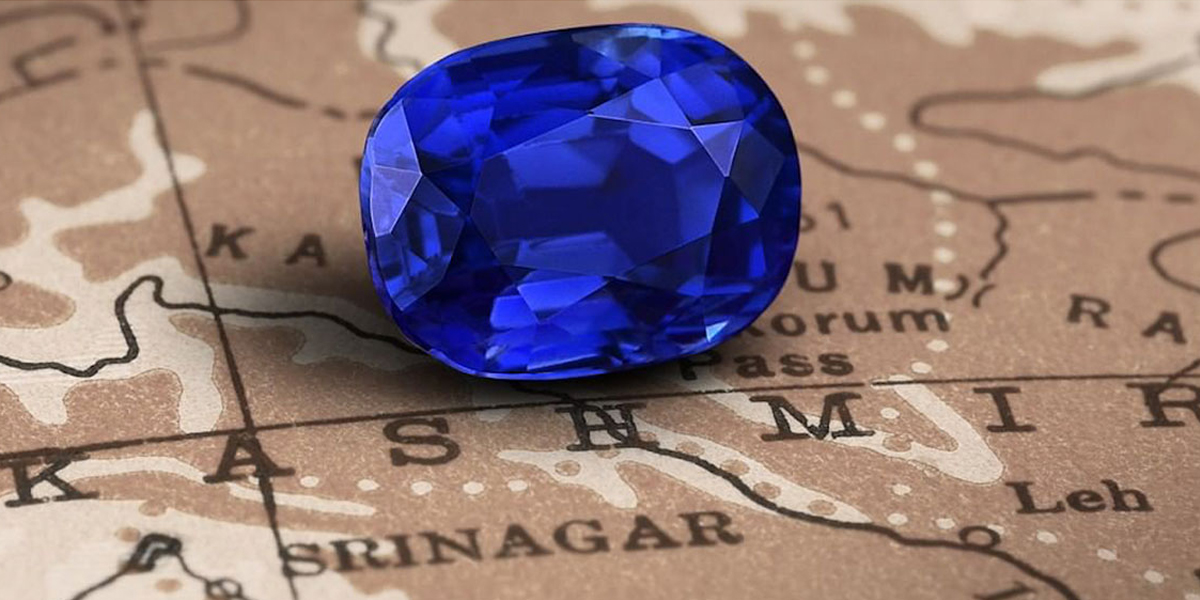
Crediti foto: thediamondtalk.in/kashmir-sapphire/
Grazie ad indagini chimiche per la maggior parte delle gemme di colore è possibile diagnosticare la zona di provenienza e di estrazione; questo tipo di analisi è fondamentale poiché vi sono alcune località che risultano più appetibili e richieste dal mercato, facendo impennare vertiginosamente i prezzi al carato.
Ciò è valido in particolar modo per gli zaffiri blu, i quali vengono estratti in diverse località del mondo: tra le più comuni troviamo lo Sri Lanka, il Myanmar, la Thailandia, il Madagascar e l’India.
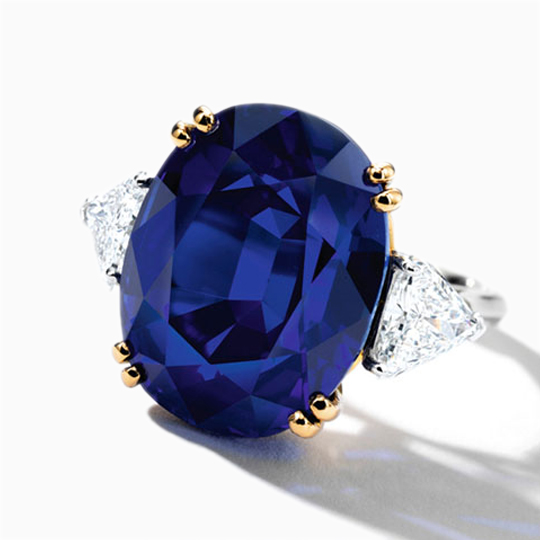
Lot 1799 – Pride of Kashmir Sapphire.
Crediti foto: news.internetstones.com
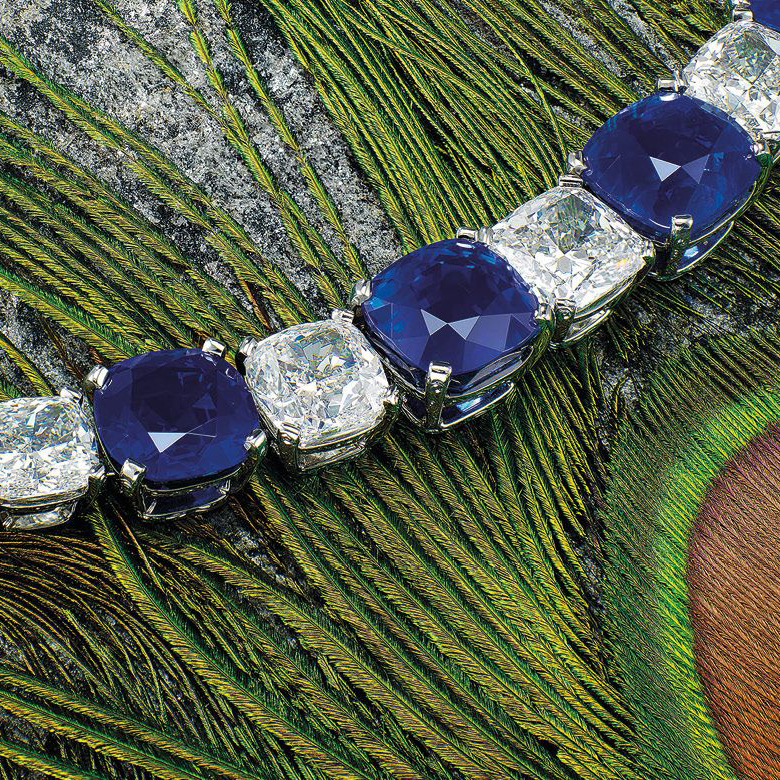
Crediti foto: hk.asiatatler.com
Proprio dall’India provengono i rarissimi e richiestissimi zaffiri blu del Kashmir: tale zona estrattiva fu scoperta alla fine del 1800 e rimase produttiva per circa una decina di anni; gli zaffiri che si rinvenivano e che attualmente vengono classificati come tali presentano una tinta di blu inimitabile, con un aspetto generale descritto come “vellutato”, dovuto alla presenza di minute inclusioni cristalline che forniscono a queste gemme un’aspetto generale ineguagliabile.
Giusto per avere un’idea: il prezzo al carato più alto pagato in un’asta per ottenere uno zaffiro del Kashmir è stato approssimativamente di 242.000$ (Ottobre 2015, fonte: “1860: THE JEWEL OF KASHMIR, Exceptional Sapphire and Diamond Ring”. Magnificent Jewels & Jadeite. Sotheby’s. Retrieved 12 September 2017); la gemma battuta all’asta pesava ben 27,68 carati!
Considerato che il sito estrattivo si è esaurito in così poco tempo, queste gemme sono difficilmente visibili e rintracciabili sul mercato, donando un’allure mistica a questi doni della natura.
Articolo a cura di Giulia Lombardo
The blue velvet of Kashmir
Sapphire, as well as ruby and emerald, is one of the most appreciated and known color gems. In particular, the sapphire belongs to the same “family” of the ruby: they are both corundums, or aluminum oxides; it differs from the latter only for its intense and inimitable blue tint produced by the presence of iron in the crystal lattice. Its name derives from a Sanskrit word which means “dear to Saturn”.
Photo credits: thediamondtalk.in/kashmir-sapphire/
Thanks to chemical investigations, for most of the colored gemstones it is possible to diagnose the area of origin and extraction; this type of analysis is fundamental since there are some places that are more attractive and requested by the market, making carats prices soar.
This is particularly valid for blue sapphires, which are extracted in different locations around the world: the most common are Sri Lanka, Myanmar, Thailand, Madagascar and India.
Lot 1799 – Pride of Kashmir Sapphire.
Photo credits: news.internetstones.com
Photo credits: hk.asiatatler.com
The very rare and requested Kashmir blue sapphires come from India: the mining area was discovered in the late 1800s and remained productive for about ten years; the sapphires that were found and that are currently known as Kashmir blue sapphires, present an inimitable blue tint, with a general appearance described as “velvety”, due to the presence of minute crystalline inclusions that give the gem an extraordinary appearance.
Just to get an idea: the highest carat price paid in an auction to obtain a Kashmiri sapphire has been of approximately $ 242,000 (October 2015, source: “1860: THE JEWEL OF KASHMIR, Outstanding Sapphire and Ring of diamonds” Magnificent jewels and jadeite, Sotheby’s, recovered on 12 September 2017); the gem sold at auction weighed 27.68 carats!
Considering that the mining site has exhausted in such a short time, it’s very difficult to find these gems, giving a mystical allure to these gifts of nature.
Written by Giulia Lombardo